
This post describes how Mount Auburn Cemetery represents a shift in American ideologies and describes its impact on urban history.
Time Periods: 19th Century

Boston’s Use of First and Second Nature
Boston was physically shaped as a result of first and second nature. Boston’s location was primarily a result of first nature, and during the early nineteenth century, second nature led Bostonians to manually reshaped the landscape by cutting down Beacon Hill to fill in tidal regions in order to create the city they had and continued to envision.
Religious Reform Movements in Boston
In Boston there were two religious groups that were having similar moral and religious reform movements in the early nineteenth century. The Evangelicals and the Unitarians has many similarities in their doctrine and had many of the same motives in their reform movements. The overlapping views of Evangelicals and Unitarians in Boston lead to religious […]

Filling Boston’s Back Bay
The most radical land-fill operation carried out in Boston was that of the Back Bay, which symbolized “Boston’s wealth and optimism in the late 1850’s and the pride and ambition of her civic leaders.”

Transportation and Development in 19th century Boston
From a seaport town to the premiere New England metropolis

The Massachusetts Bay Transit Authority
In 1894, Boston was authorized to build the first subway system in the United States, a pivotal undertaking in terms of public transportation. [1] For over a century mass public transportation in Boston changed, shifting from the private, financially unstable Boston Elevated Railway Company to the modernized, publicly funded, popular, Massachusetts Bay Transit Authority. This shift from […]
Boston’s “Emerald Necklace” Park System
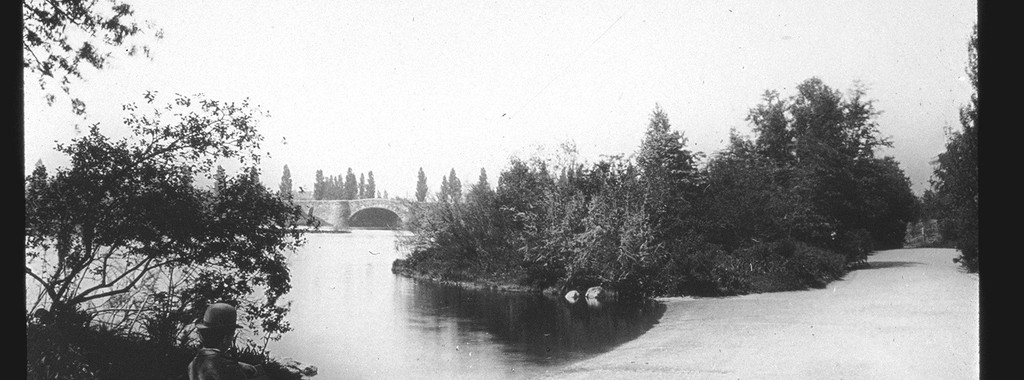
The Emerald Necklace park system in Boston served as both a spatial fix to urban growth as well as serving the interests of Boston’s elite leisure class.

Lowell and Industrialization in Eastern Massachusetts
The Lowell Mills of Massachusetts portrayed a new vision of mills defined by nature and green spaces that were seen as sources for moral guidance.

The Elite Class of 19th Century Boston
The population of Boston grew from 25,000 people to a quarter of a million people throughout the 19th century. As the population size changed, the number of elites in the city changed as well. As the 19th century went on, the new generations of elites created more of a cultural and class effort than their […]
Summer School’s Influence on Boston
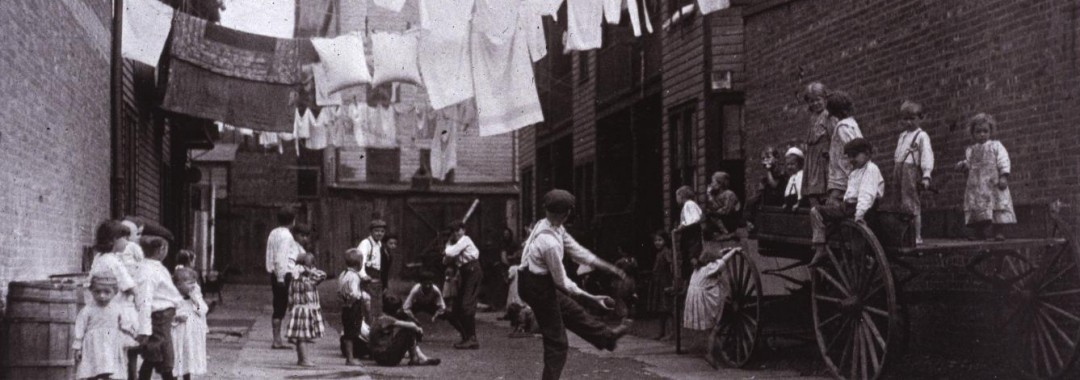
This excerpt describes the process government organizations merged with grassroots movements to build playgrounds in Boston.
