
The dominance of the automobile industry beginning in the early 20th century affected many aspects of Detroit, specifically contributing to the design of a car-centric city and the construction of architecture which reflected the prominence and wealth generated by this key industry.
Project Topics: Remaking Urban Space

The Purple Gang: How Detroit Supplied Liquor to the United States During Prohibition
Detroit became one of the most important cities during the Prohibition because of the connections the Purple Gang had to Canada, and the mass amounts of alcohol that they were able to smuggle into the United States.

The Beginnings of a City: The French Fur Trade of Early 18th Century Detroit
Detroit’s transformation from a small outpost, to a bustling town that was backed by the fur trade through French involvement.

The Black Bottom, Slum Clearance, and Detroit’s Self-Destructive Desires
The Black Bottom Neighborhood Black Bottom was among the oldest neighborhoods in Detroit prior to its demolition. Although bearing a large immigrant and Jewish population by the turn of the 20th century, factors such as the Great Migration, new job opportunities, and redlining resulted in an explosion of Black Bottom’s African American population. Over the […]
Underlying Tensions: The Chicago Race Riots of 1919 and the Chicago Commission on Race Relations
The Chicago Commission on Race Relations released a study in 1922 called The Negro in Chicago: A Study of Race Relations and a Race Riot trying to figure out what the reason behind the Chicago Race Riot 1919. The Commission came to the conclusion that the riots were based on three things: housing, labor conflict, and racial issues.
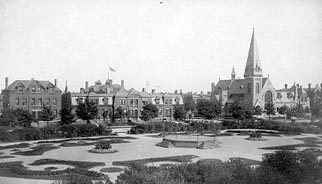
Pullman: A Company Town in an Industrial Age
The company town of Pullman was built in response to industrialization in the United States in the 19th century.

Sewers and Urban Planning in Boston
Though private citizens and companies built the early sewers of Boston the infrastructure was changed and expanded in the late 1800s with the development of the Metropolitan Sewerage Commission.

Mount Auburn Cemetery
This post describes how Mount Auburn Cemetery represents a shift in American ideologies and describes its impact on urban history.

Boston’s Use of First and Second Nature
Boston was physically shaped as a result of first and second nature. Boston’s location was primarily a result of first nature, and during the early nineteenth century, second nature led Bostonians to manually reshaped the landscape by cutting down Beacon Hill to fill in tidal regions in order to create the city they had and continued to envision.

Filling Boston’s Back Bay
The most radical land-fill operation carried out in Boston was that of the Back Bay, which symbolized “Boston’s wealth and optimism in the late 1850’s and the pride and ambition of her civic leaders.”
